

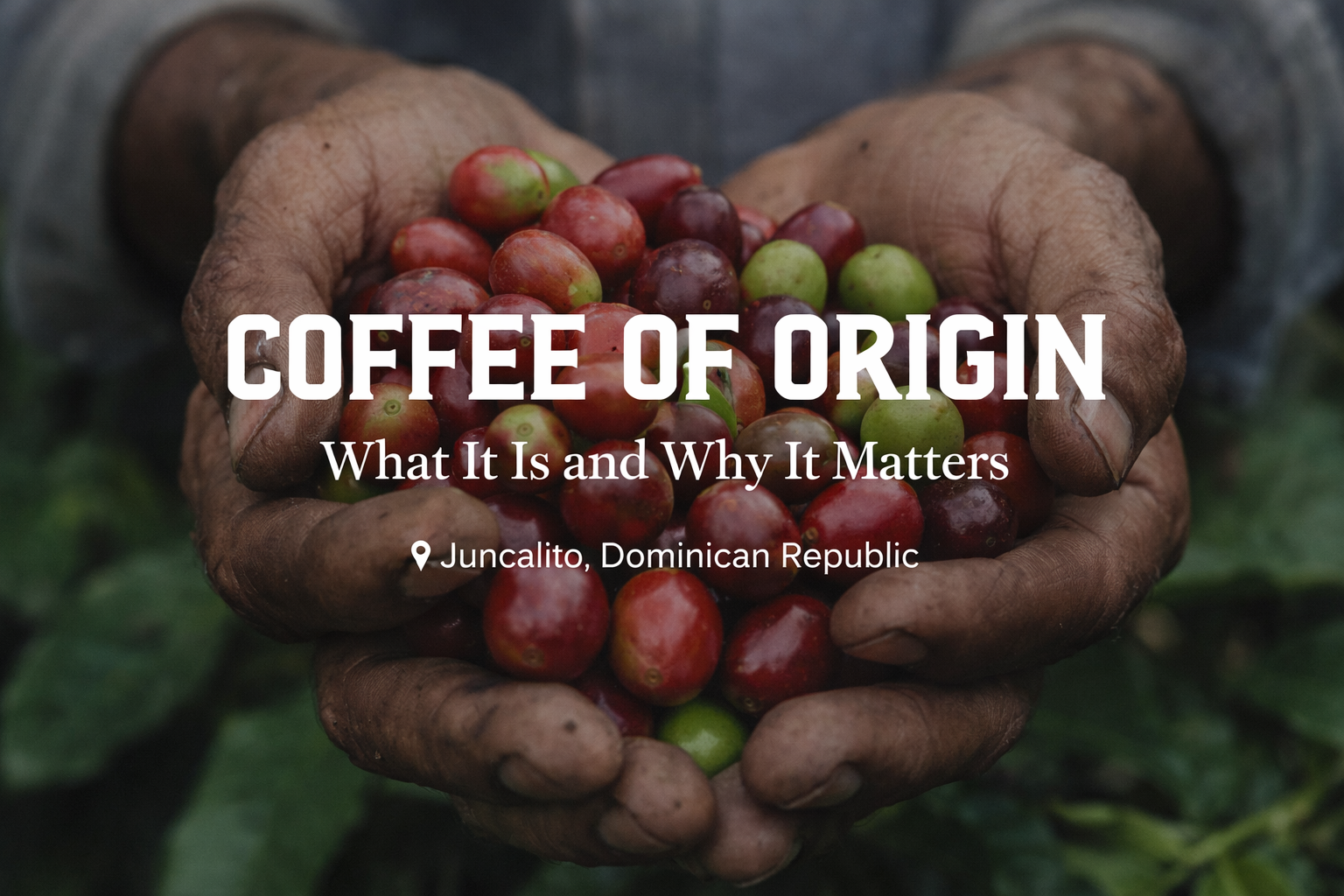
In recent years, the term coffee of origin has become increasingly important among those who look for more than just a cup of coffee. But what does it really mean? Why is it so valued in the world of specialty coffee? And most importantly—why does it matter?
What Is Coffee of Origin?
Coffee of origin refers to coffee that comes from a specific geographical location, often a single region, community, or even a single farm. This means the coffee can be clearly traced back to where it was grown, taking into account factors such as altitude, climate, soil, and farming practices.
Unlike commercial coffees—usually blends of beans sourced from multiple countries—coffee of origin tells a clear and transparent story. You know where it comes from, who grows it, and how it is handled from harvest to cup.
Origin Is More Than a Place—It’s Identity
Origin is not just a point on the map. It represents a combination of elements that define the coffee’s character, including:
- Altitude
- Soil composition
- Microclimate
- Coffee variety
- Processing and fermentation methods
- Agricultural tradition
Together, these factors shape the coffee’s sensory profile—its aroma, acidity, body, sweetness, and flavor notes.
That’s why two coffees from the same country can taste completely different when they come from different regions.
Coffee of Origin vs. Commercial Coffee
Commercial coffee is designed for consistency and mass production. Beans are often roasted very dark to mask imperfections and create a uniform flavor.
Coffee of origin takes a different path. It focuses on quality, transparency, and expression of place. The goal is not to taste the same every time, but to taste authentic.
With coffee of origin:
- Quality comes before volume
- The producer matters
- The process is transparent
- Flavor has personality
Coffee of Origin and Specialty Coffee
Most coffees of origin fall within the category of specialty coffee. This means they meet strict international quality standards, including professional sensory evaluation and traceability.
To be considered specialty, a coffee must score above a minimum quality threshold, be free of major defects, and offer a clean, balanced cup. When that coffee is also traceable to a specific origin, its value—and meaning—increases significantly.
The Human Value Behind Origin
Choosing coffee of origin is also a conscious decision. It supports:
- Coffee-growing families
- Rural communities
- Fairer and more sustainable practices
- Traditions passed down through generations
Behind every cup, there is time, knowledge, and human effort.
Coffee of Origin: A More Honest Experience
Drinking coffee of origin is not just about flavor. It’s about connection—to the land, the process, and the people behind the coffee.
It recognizes coffee as an agricultural product with identity, not a generic commodity.
At Bella Aldea, Origin Is Where Everything Begins
At Bella Aldea, we believe great coffee starts at the right place. Our commitment is to work from origin, respecting the bean, the process, and the history behind it.
Because when you know the origin, the cup tastes different.

